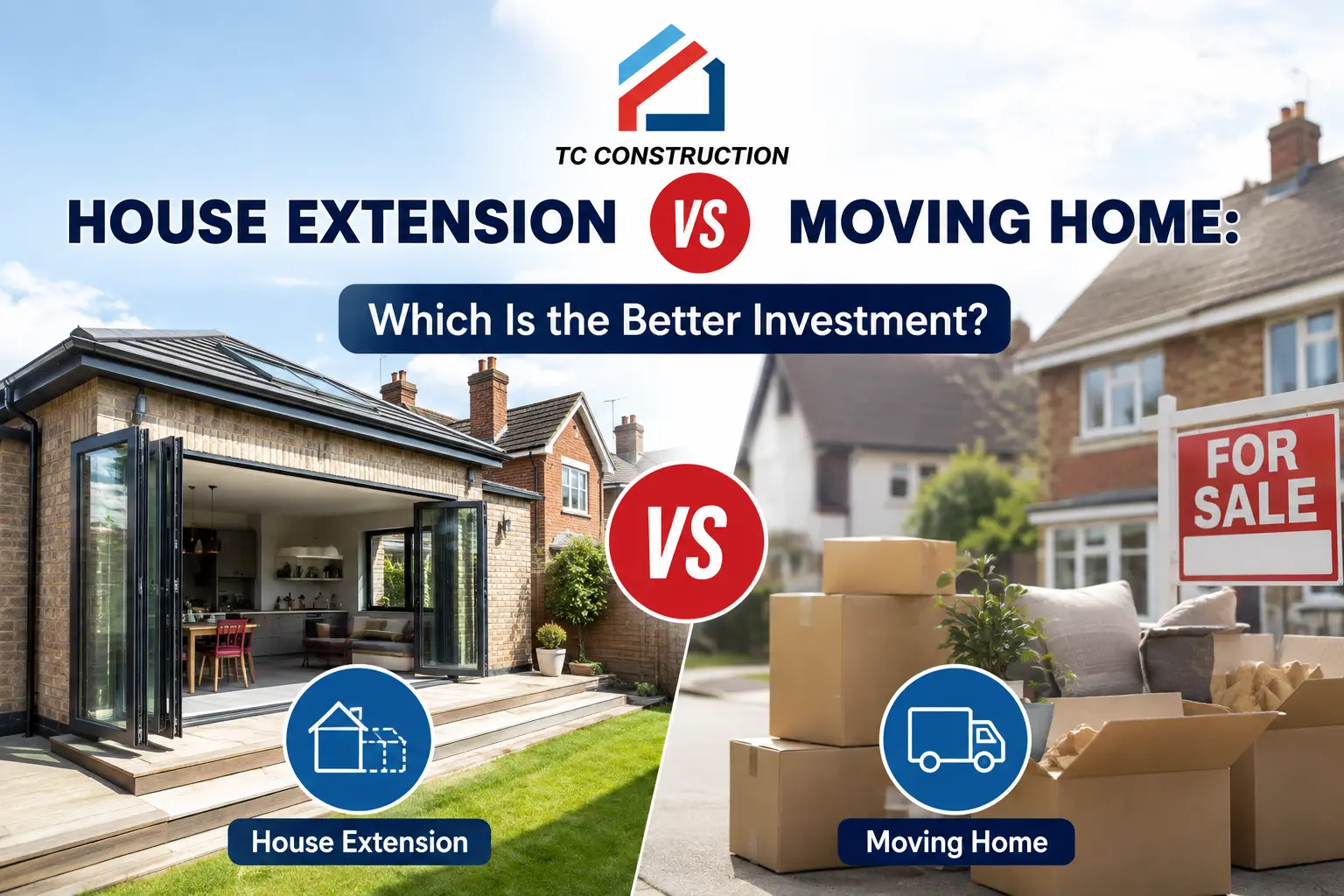
If your family has outgrown your current home, you’re probably facing one of the biggest decisions any homeowner can make: stay and grow, or pack up and move on. A House Extension Mill Hill is often the first option people consider, and for good reason it lets you reshape the home you already know and love rather than starting from scratch somewhere new. But is extending really better than moving? The honest answer is that it depends on your finances, your property, and what you actually want from your next chapter. This guide walks through both routes so you can make a decision that suits your household, not just your budget.
Why Homeowners in Mill Hill Are Weighing Up Their Options
Mill Hill and the wider North West London area have long been popular with families who value green spaces, good schools, and a quieter pace of life within reach of central London. That popularity, however, also means local property prices can make moving to a bigger home a costly step up. For many residents, extending their existing property has become a practical way to gain space without leaving a neighbourhood they’ve grown attached to.
The Case for Moving Home
Moving isn’t just about square footage sometimes it’s about a fresh start in a different school catchment, a shorter commute, or simply a change of scenery.
Potential benefits of moving:
- Access to a completely different layout, garden size, or street
- No construction disruption to live through
- A chance to move into a home that’s already exactly as you want it
Costs and considerations:
- Stamp duty, which varies depending on the property’s value and your circumstances
- Estate agent commission and legal (conveyancing) fees
- Removal costs, survey fees, and potential mortgage arrangement charges
- Time spent searching for the right property in a competitive market
Because moving costs vary so widely, it’s worth speaking to an independent financial adviser or conveyancer for figures specific to your situation rather than relying on general estimates.
The Case for Extending Your Home
For many homeowners, a well-planned extension delivers the space they need while keeping the home, garden, and community they already have.
Potential benefits of extending:
- You stay in a location you know, near established amenities, schools, and neighbours
- The layout can be tailored precisely to how your family lives
- You avoid many of the transactional costs associated with moving
Costs and considerations:
- Construction costs, which depend heavily on the size, specification, and complexity of the project
- Possible need for planning permission or adherence to permitted development rules
- Temporary disruption while building work takes place
- Building regulations approval to ensure the finished space is safe and compliant
If you’re also considering updating the rest of the property alongside an extension, it’s worth reading our complete guide to home renovations for a broader view of what’s involved.
Popular Types of House Extensions
Not all extensions are the same, and the right style depends on your property and how you use the space.
- Kitchen extensions – opening up the heart of the home for cooking, eating, and entertaining
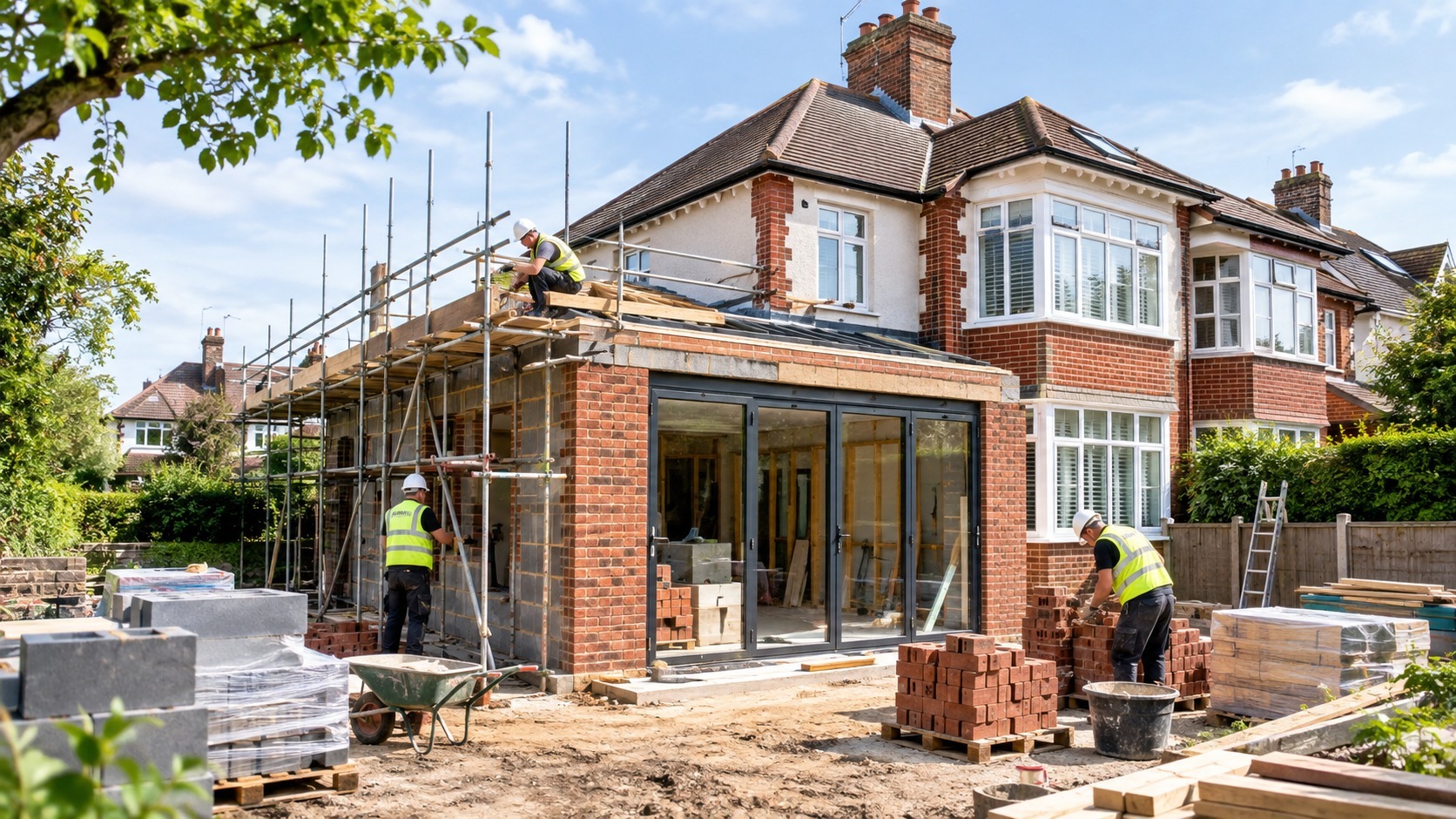
- Rear extensions – extending into the garden to create additional living space
- Side-return extensions – making use of often-wasted alley space alongside the property
- Additional bedrooms – ideal for growing families or hosting guests
- Home offices – increasingly popular for those working remotely
- Open-plan living areas – combining kitchen, dining, and lounge space into one sociable room
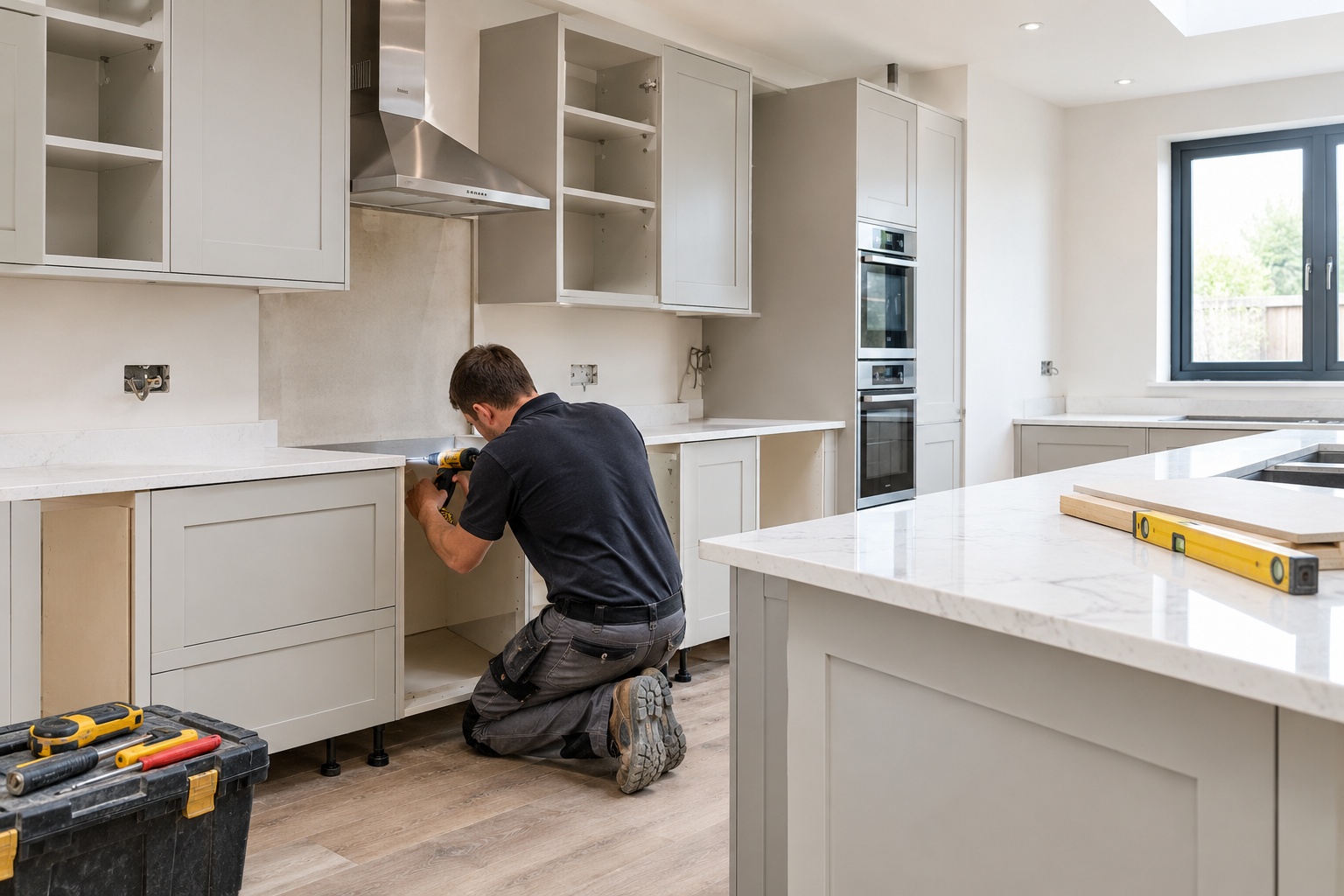
Many homeowners choose to combine a rear or side-return extension with a full kitchen upgrade. If that’s on your radar, our kitchen installation and refurbishment service is designed to work alongside extension projects for a seamless result.
Extending vs Moving: A Side-by-Side Comparison
Factor | Extending | Moving |
Upfront costs | Construction costs, design, and approvals | Stamp duty, agent fees, legal fees, removals |
Disruption | Temporary, during the build | Minimal once relocated |
Familiarity | Stay in the same home and area | New property, new area to learn |
Customisation | High built to your exact needs | Limited to what’s already built |
Timeframe | Weeks to months, depending on scope | Can take months to find and complete on a property |
Long-term outlook | Adds usable space; value impact varies | New home may already suit long-term needs |
Costs and timeframes will differ from project to project and property to property, so treat this as a general guide rather than a fixed estimate.
How Much Value Can a House Extension Add?
It’s natural to wonder whether an extension will pay for itself. While a thoughtfully designed extension can make a home more appealing to future buyers by adding usable space, the actual impact on property value depends on numerous factors including the local market, the quality of the build, how well the extension suits the property, and buyer demand at the time of any future sale. We’d always encourage homeowners to treat an extension primarily as an investment in their day-to-day quality of life, with any added property value being a welcome bonus rather than a guaranteed outcome. A local estate agent or chartered surveyor can offer guidance specific to your property if you’d like a professional opinion.
How to Decide Between Extending and Moving
There’s no single right answer but asking the right questions can help clarify your priorities.
Questions to ask yourself
- Do we love our location? If Mill Hill’s schools, transport links, and community are a big part of why you live here, extending may let you keep all of that.
- What exactly are we short on? A single extra bedroom or a bigger kitchen might be solved with an extension, while a fundamentally different layout might mean moving is simpler.
- Can our budget stretch further with an extension or with a move? Compare realistic build costs against the full cost of moving, including fees and stamp duty.
- How much disruption can we tolerate? Construction work is temporary but can be intrusive; moving avoids this but brings its own upheaval.
- Is there room to extend? Garden size, existing footprint, and local planning considerations will shape what’s realistically achievable.
- What’s our long-term plan for this home? If you expect to stay for many years, the value of a tailored space may outweigh short-term disruption.
If you’re still unsure whether your current property has renovation potential, our article on the top 10 signs your home needs a renovation is a useful starting point.
When Extending Makes Sense and When Moving Might Be Better
An extension tends to suit homeowners who are happy with their location but need more functional space, want a home tailored to their lifestyle, or want to avoid the transactional costs of moving. Moving may be the better fit if you need a fundamentally different layout, want to change area entirely, or if your current plot simply doesn’t have room to extend within planning guidelines. You can check general planning rules for extensions on the Planning Portal, and current stamp duty thresholds on the UK Government’s website, as both vary by circumstance and are updated periodically.
Choosing the Right Team for Your Extension
Whichever route you take, the quality of the professionals you work with matters enormously particularly if you decide to extend. A well-managed project with proper planning, clear communication, and skilled tradespeople makes a real difference to the finished result and to how smoothly the process feels. If you’re comparing local builders, our guide on choosing the right construction company in Mill Hill covers what to look for before you commit to a contractor.
And if your renovation plans extend beyond the extension itself perhaps a refreshed bathroom to match your new layout our bathroom installation and refurbishment service can be planned in alongside your build for a consistent finish throughout the home.
Final Thoughts
There’s no universally “better” option between extending and moving only the option that’s better for your household, your finances, and your future plans. Many Mill Hill homeowners find that a well-designed extension gives them the space they need without leaving the community they’ve built their lives around, while others find that moving suits their next chapter more. Whichever path feels right, taking the time to weigh up the costs, disruption, and long-term fit will help you make a confident decision.
If you’d like to talk through your options with a team that knows Mill Hill and North West London well, get in touch with TC Construction Ltd we’re happy to offer honest, no-pressure advice on whether extending or moving makes sense for your home.
Frequently Asked Questions
1. Is it cheaper to extend my home or to move house?
It depends on your property, the scope of the extension, and the local property market. Extending avoids costs like stamp duty and agent fees, but construction costs vary significantly, so it’s worth getting quotes and comparing them against realistic moving costs for your area.
2. Do I need planning permission for a house extension in Mill Hill?
Some extensions fall under permitted development rights, while others require full planning permission, particularly for larger or more complex projects. Rules can vary by property and local restrictions, so it’s best to check with your local planning authority or an experienced builder before starting work.
3. How long does a house extension typically take?
Timeframes vary depending on the size and complexity of the project, weather conditions, and whether planning permission is required first. A builder can give you a realistic schedule once your plans and specification are finalised.
4. Will an extension definitely increase my property's value?
Not necessarily by a guaranteed amount. A well-built, well-designed extension can make a home more appealing, but the actual impact on value depends on the local market, build quality, and buyer demand at the time of sale.
5. What's the difference between a rear extension and a side-return extension?
A rear extension extends the back of the property into the garden, while a side-return extension makes use of the narrow side alley space common in many period properties, often used to widen kitchens or living areas.
6. Can I stay in my home while it's being extended?
In many cases, yes, though this depends on the scale of the work and which parts of the house are affected. Your builder can advise on how much disruption to expect and whether temporary arrangements might be needed for certain phases.
7. How do I know if my home has room to extend?
This depends on your garden size, existing footprint, and local planning restrictions. A site visit from an experienced builder or architect is the best way to establish what’s realistically achievable on your plot.
8. Should I extend or move if I'm planning to stay long-term?
If you’re happy with your location and expect to stay for many years, an extension tailored to your lifestyle can be a worthwhile investment in day-to-day comfort, even if the exact effect on resale value can’t be guaranteed.